
On walks in the woods with her mother, Jen Schwartz was always reminded to pay attention. Her mom is an ardent birder, and every outing served as a lesson in noticing: Listen. What bird is that? Name this tree. When will this plant flower? What has changed since we were last here?
It instilled in Jen a curiosity that never left and eventually carried her into journalism, a field built on the same instincts: look closely, ask questions, notice what others walk past.
But her mom, Debby Schwartz, taught her something else, too: noticing is only the beginning. What matters is what you do with what you see.
Debby, who studied at SUNY’s College of Environmental Science and Forestry, served as the environmental commissioner in the suburban New Jersey town where Jen grew up. Jen remembers her kitchen table was often buried under oversized site plans for a proposed strip mall, a sprawl of McMansions, a parking lot—her mom poring over every parcel slated for clearing. The birdsong, the wetland, the development plans: they were all part of the same landscape, and they were all worth considering in the context of one another.
Jen brought forth the entire lesson, the noticing and the acting on it. It’s what she brings to the northeastern forests as she steps into the Program Director role running The Wild Trust, a program of The Understory.
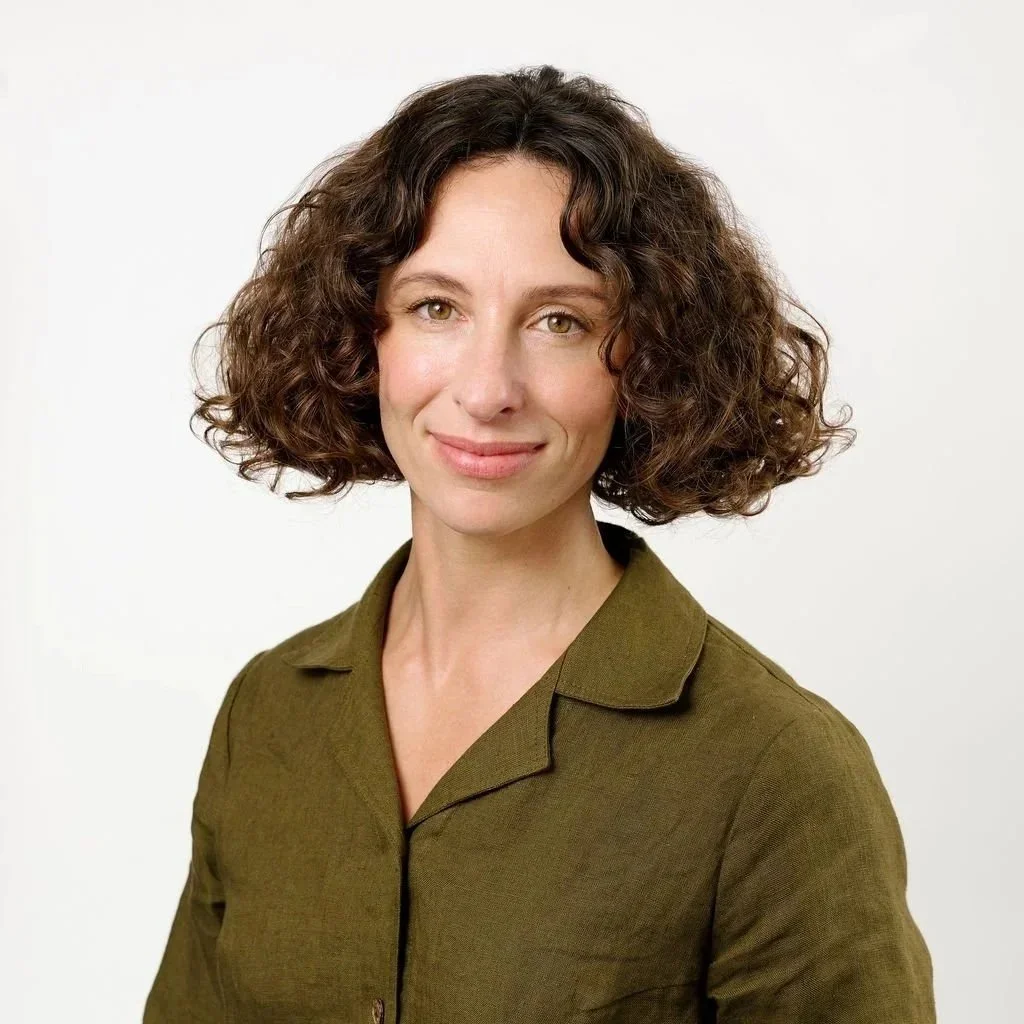
Jen Schwartz. Photo by Luca Pearl Khosrova
And right now, our forests need people who notice. If you walk into nearly any woodland in the Hudson Valley, where there should be a tangle of young oaks, maples, native shrubs and wildflowers, there is often bare ground or a thicket of invasive plants. The next generation of the forest has gone missing, overbrowsed by deer, infected by pests and pathogens, and crowded out by invasive plants. The ticks are thriving while the understory birds and pollinators have gone quiet, with no place to call home. The Wild Trust exists to help turn that around, and in many ways, Jen has been preparing for this work without even realizing it.
She first came to know these forests on foot. During the nine years that Jen lived in New York City, she would drive up, park at a trailhead, spend the weekend hiking and camping, and head back by Sunday night. Over time, she came to know this region like a backpacker does: trail by trail, ridgeline by ridgeline.
In 2020, when the pandemic untethered her work from the city, she bought a house in the northern Catskills and moved up for good.
Now she walks the same local trail through every season with her husband (whom she met at Left Bank Ciders in Catskill), watching the leaves fall and then begin again in the spring. Jen likes taking long hikes with time to stop and marvel. Her mother’s questions are now her own: What’s changed since the last time we were here? In our forests, the answer, unfortunately, is a lot.
Jen earned her undergraduate degree in journalism and spent the next two decades in media, most recently as a senior features editor at Scientific American. Much of her work focused on the topics of climate, environment, human health, technology, and misinformation—or, as Jen describes it: “how people are adapting, or not, to a rapidly changing world.” Jen’s primary goal was to help readers gain comfort with uncertainty, make sense of complex problems, and discover a sense of agency. No matter how sweeping the national or global story, Jen always went looking for people implementing solutions locally. That’s where much of the action lived: the how-to work that illuminated the bigger picture. It’s where people have the expertise of on-the-ground conditions and the motivation to fight for the place where they live.
Recently, she lived that experience herself. For nearly three years, Jen has worked alongside a heterogenous group of neighbors in Round Top to fight a proposed mega-resort that would strain the natural resources the community depends upon. They don’t all vote alike, but they do all want clean drinking water, safe roads, and hillsides that won’t give way in the next deluge. When people unite around shared values, Jen says, they become a formidable force. Navigating challenges and building upon their successes turned out to be an antidote to climate grief, and made Jen realize this was the kind of work she wanted to do full-time.
The Wild Trust offered exactly that. What lit her up when she first heard about the Program Director role was a simple, rare quality: “This is a problem that has solutions,” she says. Jen believes the science is there, the relevancy is wide, and the timing is right. It’s complex, with plenty of uncertainties, but it’s genuinely tractable.
The Wild Trust focuses on the health of the region’s forests and the intertwined threats facing them: deer overpopulation, climate change, invasive species, tick-borne illnesses, and unsustainable land-use changes, to name a few of the big ones.
Deer are a core issue because for decades, populations across the Northeast have grown far beyond what the land can sustain. They browse the forest understory relentlessly, devouring the native seedlings and saplings that would grow into the next generation of trees. In the gaps they leave behind, invasive plants that the deer won't eat crowd in. And an abundance of deer helps sustain an abundance of ticks, contributing to the rise in tick-borne illnesses.
The stakes extend well beyond the woods. Healthy forests filter our water, hold soil in place, buffer us against floods and wildfires, and remove carbon dioxide from the atmosphere—a key tool for mitigating climate change. “Forests are among our most vital pieces of infrastructure,” Jen says, but they are not treated as such.
Jen’s approach to that problem is different from status-quo models of conservation. These forests aren't pristine wilderness, and they have not been for a long time. People logged them, cleared them for agriculture, managed them for human-centered activities, and changed the climate they grow in. Leaving them alone would not return them to some wild ideal. It would mean more invasives, more deer, more ticks, and less of everything else.
"Our responsibility is to be interventionist,” Jen says. “Not just ‘leave no trace,’ but also, how can we help build resilience, to tend to forest ecosystems that are struggling to adapt to a fast-changing climate?” That will require a mindset shift. For the forest’s sake, and for our own.
She also sees The Wild Trust’s constituency as far broader than it may initially appear. Hunters have a stake in managing the deer issue, yes. But so do native-plant enthusiasts, gardeners, birders, hikers, landowners, public-health researchers, “and anyone who read Braiding Sweetgrass and came away thinking differently about our reciprocal relationship with the land,” Jen says. “There are so many coalitions of people who don't realize yet that they're part of this bigger community.” Her first priority is bridging these overlapping worlds through education and conversation, bringing in experts and leaders to tell credible stories that clarify “the relationship between deer and ticks, for instance, and the role of trees in climate resilience, and how much we take forests as water-filtration systems for granted,” she says.
What was missing from this effort was someone to connect the dots (and the people), and to show how the health of our forests touches so much of what we care about: our wellbeing, our water, our recreation, our infrastructure, and the interconnected, living web of the forest itself. Jen brings a journalist’s curiosity, a backpacker’s intimacy with these mountains, an editor’s discernment, and a community organizer’s knack for bringing people together who don’t see things the same way.
Decades after watching her mother pore over site plans at the kitchen table, Jen is the one at the table now. She is studying the bigger map of the Hudson Valley’s forests and asking what we owe them.
“If we tell that story well and connect it to meaningful action, “ she says, “we’re going to get a lot of people behind us.”
Want to stay in the loop about news and events from The Wild Trust? Subscribe to the newsletter below.